

UPC: 4988031186343
Format: CD
Release Date: Dec 02, 2016
Regular price
$26.95 USD
Regular price
Sale price
$26.95 USD
Unit price
per
Couldn't load pickup availability
FREE SHIPPING
This item is currently out of stock and may be on backorder.
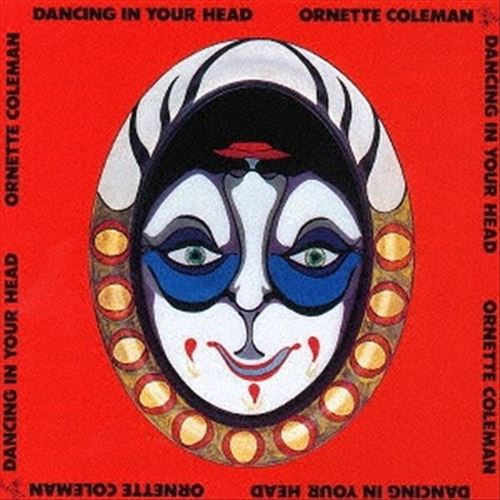
Personnel: Ornette Coleman (alto saxophone); Robert Palmer (clarinet); Master Musicians Of Jajouka (strings, percussion); Bern Nix, Charles Ellerbee (guitar); Jamaaladeen Tacuma (bass); Ronald Shannon Jackson (drums).
Recorded in Jajouka, Morocco in January 1973 and at Barclay Studios, Paris, France on December 28, 1975.
Ornette's "Dancing In Your Head" starts with a piercing, melodic chant that sounds like a schoolyard taunt. The independence of the instruments and the disassociated chords of the electric guitar are strongly reminiscent of Captain Beefheart's work of around that time (1975). While it would not be incorrect to call the music annoying, it also would not be incorrect to say that it contains joyous, liberating qualities that refresh the ears.
Prime Time's cluttered grooves support Ornette's solo (Prime Time being Charles Ellerbee and Bern Nix (guitars), Jamaaladeen Tacuma (bass) and Ronald Shannon Jackson (drums)). Coleman calls the musical theory underpinning the music "harmolodics"--whatever the name, the music sounds clunky and brash, almost deliberately nanve.
The last two cuts on "Dancing In Your Head" are from tapes that Coleman made with the Master Musicians of Jajouka (Jajouka is a village in Northwestern Morocco). Their instruments--the ghaita is a thin sounding reed instrument, the tebel a double-headed drum--sound like they blend well with Coleman, although it would be interesting to know what the Master Musicians thought of the collaboration. Two pieces are represented here, and there is a point during each recording when some sort of apotheosis seems to occur.
Recorded in Jajouka, Morocco in January 1973 and at Barclay Studios, Paris, France on December 28, 1975.
Ornette's "Dancing In Your Head" starts with a piercing, melodic chant that sounds like a schoolyard taunt. The independence of the instruments and the disassociated chords of the electric guitar are strongly reminiscent of Captain Beefheart's work of around that time (1975). While it would not be incorrect to call the music annoying, it also would not be incorrect to say that it contains joyous, liberating qualities that refresh the ears.
Prime Time's cluttered grooves support Ornette's solo (Prime Time being Charles Ellerbee and Bern Nix (guitars), Jamaaladeen Tacuma (bass) and Ronald Shannon Jackson (drums)). Coleman calls the musical theory underpinning the music "harmolodics"--whatever the name, the music sounds clunky and brash, almost deliberately nanve.
The last two cuts on "Dancing In Your Head" are from tapes that Coleman made with the Master Musicians of Jajouka (Jajouka is a village in Northwestern Morocco). Their instruments--the ghaita is a thin sounding reed instrument, the tebel a double-headed drum--sound like they blend well with Coleman, although it would be interesting to know what the Master Musicians thought of the collaboration. Two pieces are represented here, and there is a point during each recording when some sort of apotheosis seems to occur.