

Various Artists
From Bahia to the Sertoes: Brazil 1939-1955, Songs of the Sea and the Land
From Bahia to the Sertoes: Brazil 1939-1955, Songs of the Sea and the Land
UPC: 3561302514123
Format: CD (2 disc)
Release Date: Apr 18, 2006
Regular price
$32.95 USD
Regular price
Sale price
$32.95 USD
Unit price
per
Couldn't load pickup availability
FREE SHIPPING
This item is expected to ship between 2 and 4 business days after order placement.
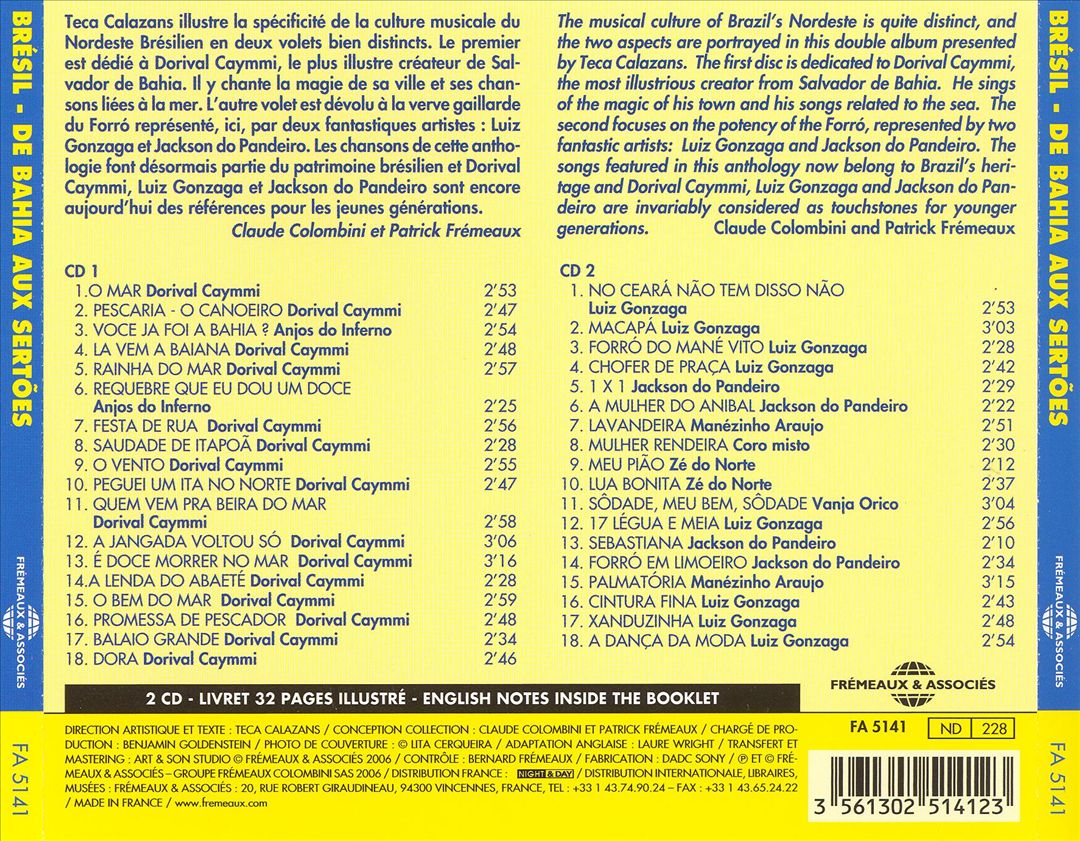
While stars like Garoto, Carmen Miranda, Jorge Ben, and Antonio Carlos Jobim may be credited in both developing and spreading Brazilian music around the globe, local heroes like Dorival Caymmi, Luiz Gonzaga, and Jackson do Pandeiro were just as beloved in their own country. From Bahia to the Sertoes: Brazil 1939-1955, Songs of the Sea and the Land, compiled and issued by French label Frémeaux & Associés, presents these lesser-known artists to the rest of the world. The first disc is completely comprised of music by Caymmi, a singer/songwriter from a coastal town in the northern province of Bahia who performs three types of pieces here: songs of the sea, sambas de roda (which relate to Bahia), and urban carioca-inspired sambas. The opener, "O Mar," is a lovely song full of Caymmi's deep, rich vocals and acoustic guitar chords that roll like waves upon the beach, while the samba "La Vem a Baiana" is quicker, with plinked strings and playful rhythms. "O Vento" features whistling and minor chords and speaks of the relationship between the wind, the sea, the boats, and the people who depend on all of those for their livelihood. It's eerily haunting, reminiscent of folk songs from the Mediterranean, and even if the Portuguese is not understood, it paints a clear picture of the world with which Caymmi was familiar and loved. On the second disc, Songs of the Land, the traditions of the forró are explored. There is a definite difference between this music and the more plaintive sambas on the first disc. The accordion plays a dominant role in much of disc two, which makes sense, because the forró is meant to be danced to. Because of this, the lyrics are lighter -- stories about everyday life and enjoying oneself -- and the pieces move happily along. "Forró do Mané Vito," from 1950, and the first song to ever include the word "forró" in it, has a fun, rollicking melody, with words written by Zé Dantas and sung by Luiz Gonzaga. Gonzaga, in fact, contributes eight of the 18 tracks on Songs of the Land, while percussionist and singer Jackson do Pandeiro adds his unique rhythms to four, including his first ever recording, "Forró em Limoeiro." It's a nice collection of music from northern Brazil, and for those interested in the history of samba and MPB, or world music in general, it's a good place to start. ~ Marisa Brown
Tracks:
Disc 1:
1 - O Mar
2 - Pescaria - O Canoeiro
3 - Voce Ja Foi a Bahia?
4 - Vem a Baiana
5 - Rainha do Mar
6 - Requebre Que Eu Dom Um Doce
7 - Festa de Rua
8 - Saudade de Itapoã
9 - O Vento
10 - Peguei Um Ita No Norte
11 - Quem Vem Pra Beira do Mar
12 - Jangada Voltou Só
13 - É Doce Morrer No Mar
14 - Lenda do Abaeté
15 - O Bem do Mar
16 - Promessa de Pescador
17 - Balaio Grande
18 - Dora
Disc 2:
1 - No Ceará Não Tem Disso Não
2 - Macapá
3 - Forró do Mané Vito
4 - Chofer de Praça
5 - 1 X 1
6 - Mulher do Anibal
7 - Lavandeira
8 - Mulher Rendeira
9 - Meu Piao
10 - Lua Bonita
11 - Sôdade, Meu Bem, Sôdade
12 - 17 Légua E Meia
13 - Sebastiana
14 - Forró em Limoeiro
15 - Palmatória
16 - Cintura Fina
17 - Xanduzinha
18 - Dança Da Moda
1 - O Mar
2 - Pescaria - O Canoeiro
3 - Voce Ja Foi a Bahia?
4 - Vem a Baiana
5 - Rainha do Mar
6 - Requebre Que Eu Dom Um Doce
7 - Festa de Rua
8 - Saudade de Itapoã
9 - O Vento
10 - Peguei Um Ita No Norte
11 - Quem Vem Pra Beira do Mar
12 - Jangada Voltou Só
13 - É Doce Morrer No Mar
14 - Lenda do Abaeté
15 - O Bem do Mar
16 - Promessa de Pescador
17 - Balaio Grande
18 - Dora
Disc 2:
1 - No Ceará Não Tem Disso Não
2 - Macapá
3 - Forró do Mané Vito
4 - Chofer de Praça
5 - 1 X 1
6 - Mulher do Anibal
7 - Lavandeira
8 - Mulher Rendeira
9 - Meu Piao
10 - Lua Bonita
11 - Sôdade, Meu Bem, Sôdade
12 - 17 Légua E Meia
13 - Sebastiana
14 - Forró em Limoeiro
15 - Palmatória
16 - Cintura Fina
17 - Xanduzinha
18 - Dança Da Moda