

UPC: 617936211822
Format: CD
Release Date: Oct 19, 1998
Regular price
$9.95 USD
Regular price
Sale price
$9.95 USD
Unit price
per
Couldn't load pickup availability
FREE SHIPPING
This item is expected to ship between 4 and 8 business days after order placement.
Personnel includes: Busi Mhlongo (vocals, arranger); Lokua Kanza (vocals, acoustic guitar); Mabi Thobejane (vocals, bongos); Mkhalelwa "Spector" Ngwazi (acoustic guitar); Jack Djeyim (electric guitar); Umfazi Omnyama (acoustic 12-string guitar); Mphendukelwa Mkhize (concertina); Will Mowat (keyboards, programming); Simpiwe Matole (marimba); Noel Ekwabi, Hilaire Penda, Themba "Ntshebe" Ngcobo (bass); Brice Wassy (drums); Sydney Thiam (percussion); Moussa Kanoute (Kora); Thobi Mghobozi, Phika Mnyandu, Jabulani Mthembu, Mzonjani Shezi, Mkhalelwa Ngwazi, Themba Ngcobo (background vocals).
Recorded at Brownhill Farm Studios, Sussex, England. Includes liner notes by Felicia Nkomo.
Personnel: Lokua Kanza (vocals, acoustic guitar, background vocals); Mabi Thobejane (vocals, bongos); Jacques Djeyim (guitar); Moussa Kanoute (kora); Mphendukelwa Mkhize (concertina); Will Mowat (keyboards, programming, keyboard programming); Simpiwe Matole (marimba); Brice Wassy (drums); Sydney Thiam (percussion); Sazi Dlamini (background vocals).
Audio Mixers: Arabella Rodriguez; Will Mowat.
Liner Note Author: Will Mowat.
Recording information: Brownhill Farm Studios, Sussex, England; DB Studios, Durban, South Africa; Downtown Studios, Johannesburg, South Africa; Roundhouse Studios, London, England; Studio I, London, England.
Photographer: Peter Williams.
Arranger: Busi Mholongo.
No matter how scintillating and life-affirming the mbqanga of Mahlathini and the Mahotella Queens was when it hit the international pop scene in the late '80s, the fact remains it was golden oldies music from the '60s in South Africa, the equivalent of Chuck Berry or James Brown, or maybe the Rolling Stones. Urban Zulu an intriguing if flawed attempt to revive and update the Zulu traditional music that spawned mbqanga for the 2000 generation.
Producer Will Mowat (Soul II Soul) also worked with Fernanda Abreu in Brazil, so he's no stranger to this kind of tradition update. But his overall thrust isn't to push Mhlongo towards Soul II Soul contemporary-dance-mix-land, or make some kind of Angelique Kidjo move -- the music leads from roots maskanda tradition, with cascading acoustic guitar lines and buoyant bass throbs at the fore. "Yehlisan'umoya Ma-Afrika" even pulls off an old Mahlathini trick -- the music creates a sensation of being inevitable because the riffs are so organic, it feels like it would be a crime against nature if they fell together any other way.
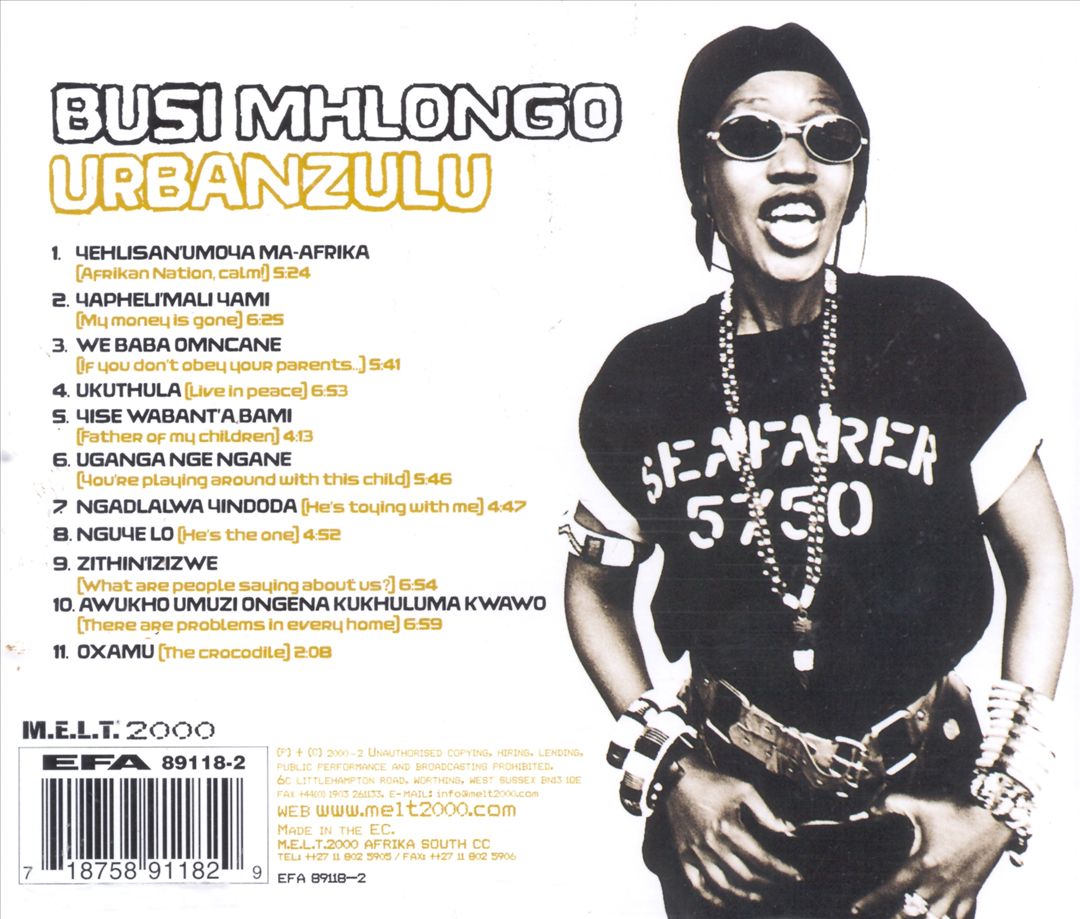
All the songs were written by Mhlongo, acoustic guitarist Mkhalelwa Ngwazi, and bassist Thembani Ngcobo, and either speak out against stopping the violence in the new South Africa, or men exploiting the innocence of young women. Her voice is back in the mix and usually cloaked in massed backing vocals -- Mhlongo is no belter; she's more prone to sudden ululations and almost guttural exclamations that makes you wonder if her update is more of the artist/conceptualist sort (she does look the part on the cover sleeve).
"Ujuthula" is a bit cluttered, and the "Yise Wabant'a Bami" duet with Lokua Kanza is nothing to write home about, but the real problem is that the sameness of the traditional arrangements wins out over the individual touches. Reggae tinges flavor "Yapheli'mali Yami," "We Baba Omncane" sets choppy bass counter-rhythms against a guitar/concertina combo lilt, and unusual backing harmonies distinguish "Uganga Nge Ngane" and "Zithin'izizwe." The traditional "Oxamu" closes out with Mhlongo singing alone using almost Xhosa-like tongue clicks.
"Ngadlalwa Yindoda" incorporates the bass solo from the Staples' "I'll Take You There," and what's notable about Urban Zulu, strangely enough, is how familiar this music all sounds, rather than providing any sense of "here's something new and different from South Africa." There's not a trace of kwaito, the electronic hip-hop/house sound that rules the townships, and you almost wonder if the traditional emphasis here is playing more to the international scene than for consumers back home. But even if Urban Zulu doesn't really merit the high critical praise it received, it's a promising debut, and Mhlongo is an artist to keep an ear out for in the future. ~ Don Snowden
Recorded at Brownhill Farm Studios, Sussex, England. Includes liner notes by Felicia Nkomo.
Personnel: Lokua Kanza (vocals, acoustic guitar, background vocals); Mabi Thobejane (vocals, bongos); Jacques Djeyim (guitar); Moussa Kanoute (kora); Mphendukelwa Mkhize (concertina); Will Mowat (keyboards, programming, keyboard programming); Simpiwe Matole (marimba); Brice Wassy (drums); Sydney Thiam (percussion); Sazi Dlamini (background vocals).
Audio Mixers: Arabella Rodriguez; Will Mowat.
Liner Note Author: Will Mowat.
Recording information: Brownhill Farm Studios, Sussex, England; DB Studios, Durban, South Africa; Downtown Studios, Johannesburg, South Africa; Roundhouse Studios, London, England; Studio I, London, England.
Photographer: Peter Williams.
Arranger: Busi Mholongo.
No matter how scintillating and life-affirming the mbqanga of Mahlathini and the Mahotella Queens was when it hit the international pop scene in the late '80s, the fact remains it was golden oldies music from the '60s in South Africa, the equivalent of Chuck Berry or James Brown, or maybe the Rolling Stones. Urban Zulu an intriguing if flawed attempt to revive and update the Zulu traditional music that spawned mbqanga for the 2000 generation.
Producer Will Mowat (Soul II Soul) also worked with Fernanda Abreu in Brazil, so he's no stranger to this kind of tradition update. But his overall thrust isn't to push Mhlongo towards Soul II Soul contemporary-dance-mix-land, or make some kind of Angelique Kidjo move -- the music leads from roots maskanda tradition, with cascading acoustic guitar lines and buoyant bass throbs at the fore. "Yehlisan'umoya Ma-Afrika" even pulls off an old Mahlathini trick -- the music creates a sensation of being inevitable because the riffs are so organic, it feels like it would be a crime against nature if they fell together any other way.
All the songs were written by Mhlongo, acoustic guitarist Mkhalelwa Ngwazi, and bassist Thembani Ngcobo, and either speak out against stopping the violence in the new South Africa, or men exploiting the innocence of young women. Her voice is back in the mix and usually cloaked in massed backing vocals -- Mhlongo is no belter; she's more prone to sudden ululations and almost guttural exclamations that makes you wonder if her update is more of the artist/conceptualist sort (she does look the part on the cover sleeve).
"Ujuthula" is a bit cluttered, and the "Yise Wabant'a Bami" duet with Lokua Kanza is nothing to write home about, but the real problem is that the sameness of the traditional arrangements wins out over the individual touches. Reggae tinges flavor "Yapheli'mali Yami," "We Baba Omncane" sets choppy bass counter-rhythms against a guitar/concertina combo lilt, and unusual backing harmonies distinguish "Uganga Nge Ngane" and "Zithin'izizwe." The traditional "Oxamu" closes out with Mhlongo singing alone using almost Xhosa-like tongue clicks.
"Ngadlalwa Yindoda" incorporates the bass solo from the Staples' "I'll Take You There," and what's notable about Urban Zulu, strangely enough, is how familiar this music all sounds, rather than providing any sense of "here's something new and different from South Africa." There's not a trace of kwaito, the electronic hip-hop/house sound that rules the townships, and you almost wonder if the traditional emphasis here is playing more to the international scene than for consumers back home. But even if Urban Zulu doesn't really merit the high critical praise it received, it's a promising debut, and Mhlongo is an artist to keep an ear out for in the future. ~ Don Snowden
Tracks:
1 - Yehlisan'umoya Ma-Afrika (Afrikan Nation, Calm!)
2 - Yapheli'mali Yami (My Money Is Gone)
3 - We Baba Omncane (If You Don't Obey Your Parents)
4 - Ukuthula (Live in Peace)
5 - Yise Wabant'a Bami (Father of My Children)
6 - Uganga Nge Ngane (You're Playing Around With This Child)
7 - Ngadlawa Yindoda (He's Toying With Me)
8 - Nguye Lo (He's the One)
9 - Zithin'izizwe (What Are People Saying About Us?)
10 - Awukho Umuzi Ongena Kukhuluma Kwawo (There Are Problems in Every Home)
11 - Oxamu (The Crocodile)
2 - Yapheli'mali Yami (My Money Is Gone)
3 - We Baba Omncane (If You Don't Obey Your Parents)
4 - Ukuthula (Live in Peace)
5 - Yise Wabant'a Bami (Father of My Children)
6 - Uganga Nge Ngane (You're Playing Around With This Child)
7 - Ngadlawa Yindoda (He's Toying With Me)
8 - Nguye Lo (He's the One)
9 - Zithin'izizwe (What Are People Saying About Us?)
10 - Awukho Umuzi Ongena Kukhuluma Kwawo (There Are Problems in Every Home)
11 - Oxamu (The Crocodile)