

UPC: 4988031178201
Format: CD
Release Date: Nov 04, 2016
Regular price
$20.95 USD
Regular price
Sale price
$20.95 USD
Unit price
per
Couldn't load pickup availability
FREE SHIPPING
This item is currently out of stock and may be on backorder.
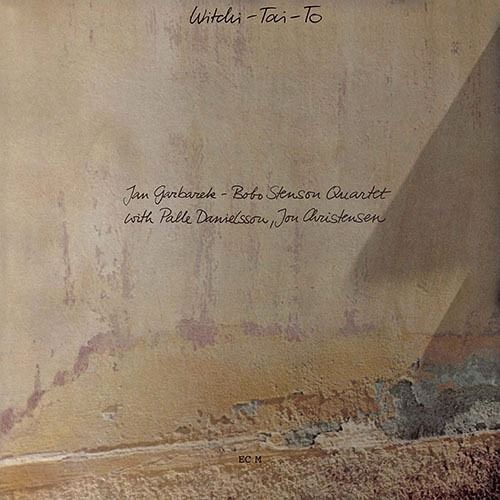
-Bobo Stenson Quartet.
Jan Garbarek-Bobo Stenson Quartet: Jan Garbarek (soprano & tenor saxophones); Bobo Stenson (piano); Palle Danielsson (bass); Jon Christensen (drums).
Recorded at Arne Bendiksen Studio, Oslo, Norway on November 27 & 28, 1973.
An innovator with a distinctive sound and unique musical vantage, Jan Garbarek was one of the first European horn players to garner respect on the US jazz scene. On WITCHI-TAI-TO, the saxophonist teams up with Swedish pianist Bobo Stenson, who is a trailblazer in his own right. The result is a highly collaborative album that belies Garbarek's seemingly inexorable use of all things ethereal, spacey, and abstract. Then again, this is an early effort (recorded in 1973) made during a time when Garbarek still had to prove himself to the jazz purists.
In general, this album is less about breaking ground than it is about rooting itself into the jazz culture. It is by no means "safe" or "straight-ahead," though. For example, "Kukka" has a swinging feel to it, but the McCoy Tyner-like flurries of notes by Stenson, and the free-time feel employed by drummer Jon Christensen make this track stand out as quite modern, even by 21st-century standards. This sense of modernity is even more pronounced on the lengthy "Desireless," a 20-minute epic that harks back to John Coltrane's A LOVE SUPREME.
Jan Garbarek-Bobo Stenson Quartet: Jan Garbarek (soprano & tenor saxophones); Bobo Stenson (piano); Palle Danielsson (bass); Jon Christensen (drums).
Recorded at Arne Bendiksen Studio, Oslo, Norway on November 27 & 28, 1973.
An innovator with a distinctive sound and unique musical vantage, Jan Garbarek was one of the first European horn players to garner respect on the US jazz scene. On WITCHI-TAI-TO, the saxophonist teams up with Swedish pianist Bobo Stenson, who is a trailblazer in his own right. The result is a highly collaborative album that belies Garbarek's seemingly inexorable use of all things ethereal, spacey, and abstract. Then again, this is an early effort (recorded in 1973) made during a time when Garbarek still had to prove himself to the jazz purists.
In general, this album is less about breaking ground than it is about rooting itself into the jazz culture. It is by no means "safe" or "straight-ahead," though. For example, "Kukka" has a swinging feel to it, but the McCoy Tyner-like flurries of notes by Stenson, and the free-time feel employed by drummer Jon Christensen make this track stand out as quite modern, even by 21st-century standards. This sense of modernity is even more pronounced on the lengthy "Desireless," a 20-minute epic that harks back to John Coltrane's A LOVE SUPREME.